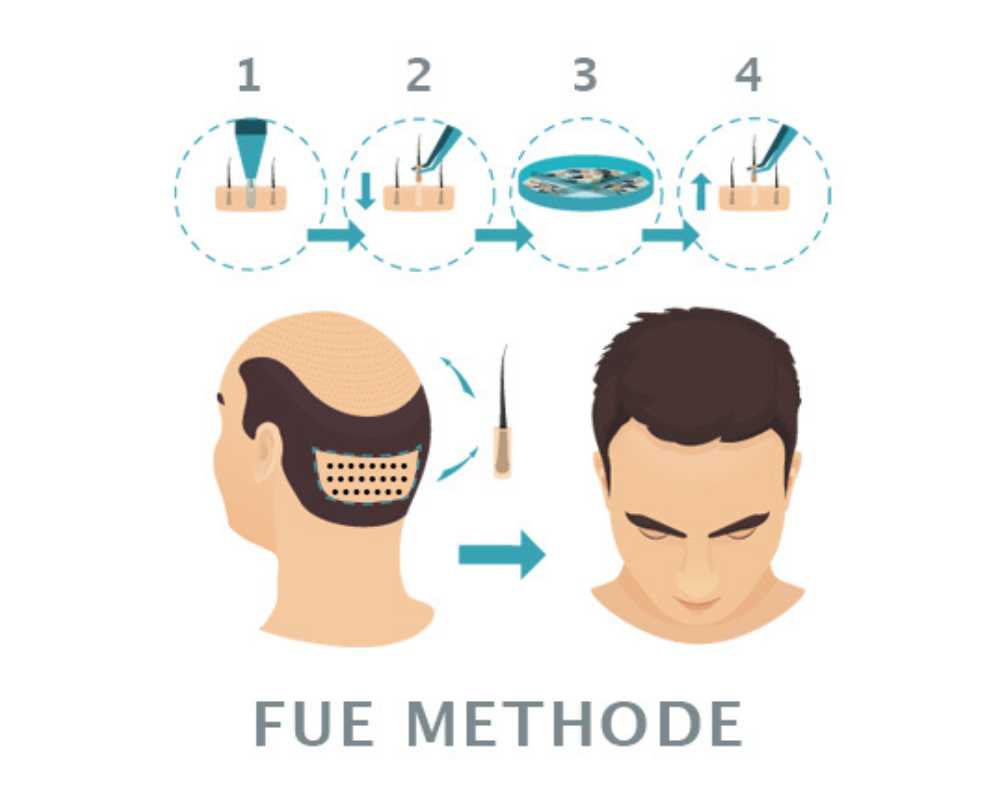
FUE removes follicular units one at a time using 0.7–0.8 mm hollow needles, precise, minimally invasive, and without the strip of skin that classic FUT requires.
Follicular Unit Extraction is among the gentlest and most advanced techniques in hair transplantation. Individual follicular units, the natural clusters of one to four hairs, are lifted precisely from the donor area at the back of the head using fine hollow needles, then placed exactly where hair has been lost.
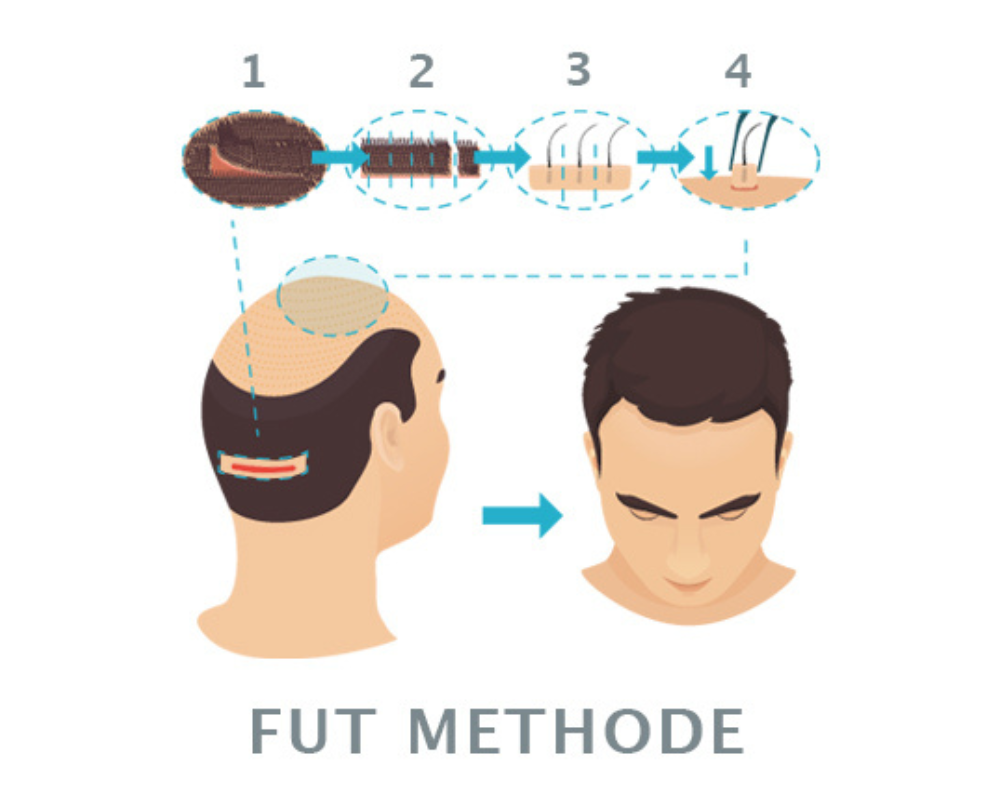
Unlike the older FUT method, which removes a whole strip of skin, FUE leaves no linear scar. The extraction points show at most as tiny dots and close within a few days.
Each follicle is taken individually and with great care, so its structure and vitality survive intact. The grafts are then held in nutrient solution and placed into fine channels prepared in advance, each one following the natural direction of growth, the right density and an even, harmonious spread.
The ARTAS® iX system, originally developed by Restoration Robotics, is the most advanced form of FUE currently available. Robot-assisted techniques have long proved themselves in cardiac and kidney transplant surgery; in hair medicine they improve the consistency, safety and effectiveness of single-unit extraction.
Cameras and algorithms register every follicular unit individually, calculating exit angle, depth, calibre and spacing in real time.
The system picks out the strongest units and harvests only as many grafts as the agreed treatment plan calls for.
Faster harvesting shortens the time grafts spend outside the body, a direct factor in how well they take.
The treating doctor can override any decision the system makes at any point. The robotics do not replace medical planning, they carry it out more precisely.
FUE is particularly suited to cases where it is still unclear how the hair loss will progress. Smaller punches greatly reduce scarring and keep the donor area available for later sessions.
Small punches keep trauma to the scalp to a minimum and allow it to recover quickly, one reason the technique fits easily around an active life.
Request a consultationAssessment of donor density, hair structure and likely progression. The hairline is defined.
Local anaesthetic to both donor and recipient areas. The procedure is done on an outpatient basis.
Units are extracted individually with 0.7–0.8 mm punches and held in nutrient solution.
Fine recipient channels are opened to match growth direction, angle and planned density.
Grafts are placed one by one. Crusting usually clears after 7–10 days.
In the literature, both techniques achieve survival rates above 90 per cent in experienced hands. Which one is right for you is decided at the consultation.
The procedure is carried out under local anaesthetic and is virtually pain-free. Because FUE is minimally invasive, most patients are back to normal activities quickly.
No. FUE leaves only pinpoint extraction marks that are barely visible even on short hair. It produces nothing like the linear scar left by FUT.
Yes. It combines very well with PRP, mesotherapy, Regenera Activa or Seffihair® to further support graft survival and hair quality. We agree the right combination with you at the consultation.
Between roughly four and eight hours depending on the number of grafts, normally in a single day as an outpatient. Robot-assisted extraction can shorten this noticeably.
The transplanted hairs shed after a few weeks, a normal part of the cycle. New growth usually begins at three to four months, with the final result at around twelve.
In a personal consultation we work out whether FUE is right for your situation, openly, with no sales pressure and an honest assessment.
Arrange an appointment
